
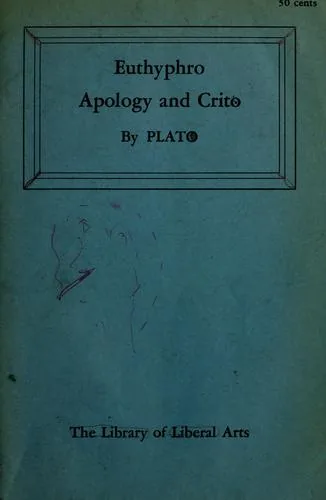
Euthyphro, Apology, and Crito, and the Death scene from Phaedo
FrançaisEnglish
- philosophie
- biographie
- ancient philosophers
- philosopher
Résumé
Plato's "Euthyphro," "Apology," and "Crito" explore Socrates's trial and death, with "Euthyphro" focusing on piety, "Apology" presenting his defense against charges of impiety band corruption, and "Crito" addressing Socrates's refusal to…
Lire le résumé complet ↓Réduire le résumé ↑
Plato's "Euthyphro," "Apology," and "Crito" explore Socrates's trial and death, with "Euthyphro" focusing on piety, "Apology" presenting his defense against charges of impiety band corruption, and "Crito" addressing Socrates's refusal to escape prison, emphasizing his commitment to justice and Athenian law. Here's a more detailed breakdown of each dialogue: Euthyphro: Socrates encounters Euthyphro, who is on his way to court to prosecute his father, and Socrates questions him about the nature of piety and justice. Euthyphro initially struggles to define piety, and Socrates probes him, ultimately exposing the shortcomings of his various definitions. The dialogue raises questions about whether actions are good because the gods love them or if the gods love them because they are inherently good (the Euthyphro Dilemma). Apology: Socrates delivers his defense before his Athenian judges, who have charged him with impiety and corrupting the youth. He argues that he has not engaged in wrongdoing and that his philosophical questioning and pursuit of truth are for the benefit of society. The dialogue highlights Socrates's commitment to truth and his refusal to compromise his beliefs, even in the face of potential death. Crito: Socrates, awaiting execution in prison, is visited by his friend Crito, who offers him an opportunity to escape. Socrates refuses the offer, arguing that he cannot disobey the laws of the city that have given him so much. He argues that the state, through its laws, has a legitimate authority, and that citizens have a moral duty to obey them. This dialogue emphasizes the importance of justice, obedience to law, and the Socratic commitment to living according to his principles, even in the face of death. Plato's Euthyrphro, Apology, and Crito portray Socrates' words and deeds during his trial for disbelieving in the Gods of Athens and corrupting the Athenian youth, and constitute a defense of the man Socrates and of his way of life, the philosophic life.
Vous aimerez aussi
- Même auteurΦίληβος
- Même auteurΣοφιστής
- Même auteurGreat Dialogues of Plato
- Même auteurΚριτίας
- Genre procheMemorabilia
- Genre procheLives, teachings, and sayings of famous philosophers
- Genre procheDon Quijote de la Mancha
- Genre procheThe Prince
Avis et notes
Tu as vu ou découvert cette œuvre ? Note, critique et classe-la dans ta bibliothèque culturelle RaryLib.
Déjà des listes sur Letterboxd, Goodreads, TV Time ou AniList ?
Importe ton fichier, sans ressaisir tes œuvres. Gratuit.
Importer ma collection →